


Should You Be Worried About Mosquitoes in Thailand?
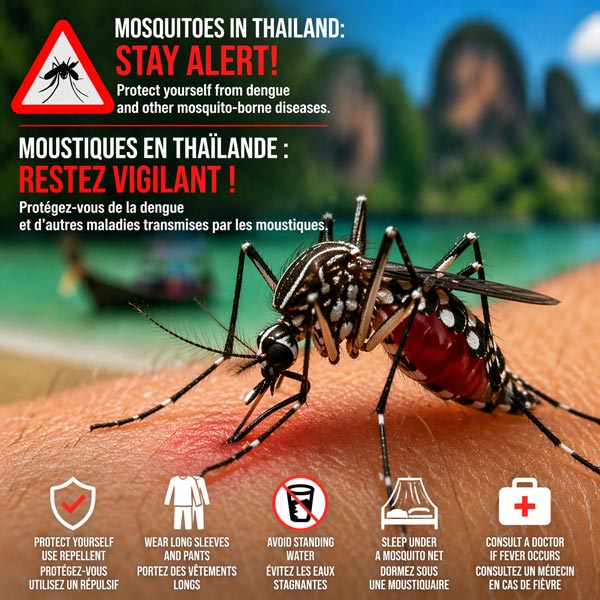
Should You Be Worried About Mosquitoes in Thailand?
Thailand attracts millions of travelers every year with its paradise beaches, majestic temples and delicious cuisine. However, behind this idyllic setting hides a small but often underestimated enemy: the mosquito.
Should you really worry about it? The answer is nuanced. While most mosquito bites are harmless, some can transmit serious diseases such as dengue. This viral infection is now one of the main health risks in Thailand.
In this article, we will look in detail at: the real risks related to mosquitoes, the most at-risk areas in Thailand, the symptoms of dengue (including extreme fatigue), the essential precautions to take, what to do in case of suspicion, available treatments and finally natural solutions such as anti-mosquito balms.
Mosquitoes in Thailand: a real but manageable risk
In Thailand, mosquitoes are part of everyday life. Contrary to common belief, they are not only found in jungles or rural areas. They are everywhere: in cities, on beaches, in hotels and even in shopping malls.
The main danger comes from Aedes mosquitoes, responsible for transmitting dengue. These mosquitoes have an important characteristic: they bite mainly during the day, especially early in the morning and late in the afternoon.
Dengue: the main danger related to mosquitoes
What is dengue?
Dengue is a viral disease transmitted by the bite of an infected mosquito. It is widespread in Southeast Asia and particularly in Thailand, where it circulates all year round.
Most at-risk areas in Thailand
Contrary to what one might think, there is no completely safe area. The south (Phuket, Krabi, Koh Samui), the northeast (Isan) and major cities such as Bangkok or Chiang Mai are particularly affected.
High-risk periods
The risk increases significantly during the rainy season (May to October), an ideal period for mosquito breeding.
Symptoms of dengue: never ignore them
Symptoms usually appear between 3 and 10 days after the bite.
The most common signs are: high fever, headaches, muscle and joint pain, pain behind the eyes, nausea and skin rash.
But above all, extreme fatigue, often described as overwhelming.
What to do if you suspect dengue?
Consult a doctor immediately and get a blood test. Avoid aspirin and anti-inflammatory drugs.
Treatment for dengue
There is no specific treatment. Rest, hydration and paracetamol are recommended.
Anti-mosquito balms
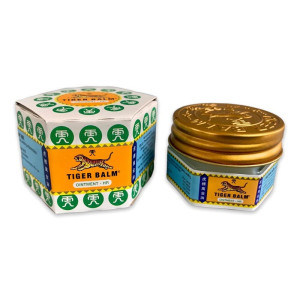
White Tiger Balm
Natural repellent, anti-inflammatory and soothing.
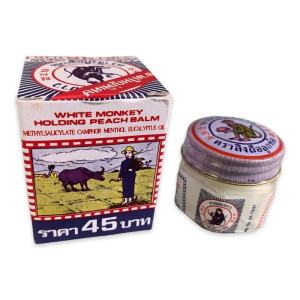
White Monkey Balm
Repellent effect and fast soothing action.
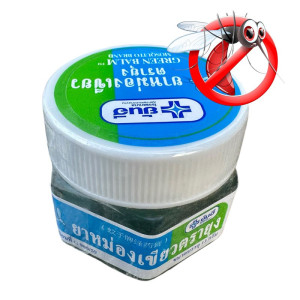
Yanhee Mosquito Green Balm
Repellent, antiseptic and soothing.
Travel insurance: essential
Taking out travel insurance is strongly recommended. Always keep your insurance certificate with you in English.
Conclusion
Yes, you should remain vigilant about mosquitoes in Thailand, but with proper precautions, the risk remains manageable.
Share this content
 Travel
 Wellness
 Our videos